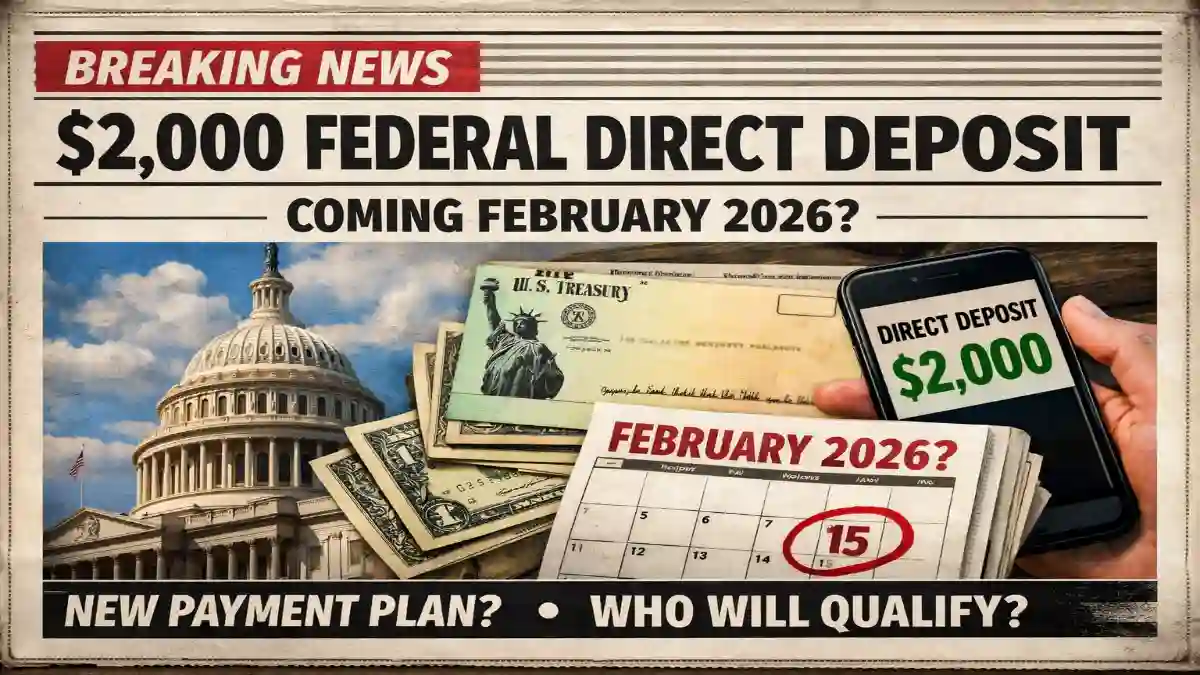
Talk of a $2,000 federal direct deposit for all in February 2026 is spreading fast across social media and news platforms. Many people are hoping this payment could help with rising living costs, rent, food prices, and medical bills. While the idea sounds simple and exciting, the reality is more complex. This article explains where this $2,000 payment talk is coming from, what is confirmed, what is not, and who could qualify if such a payment is approved. The goal is to give clear and simple information so readers are not misled.
Where the $2,000 Payment News Is Coming From
The $2,000 federal direct deposit idea is linked to ongoing discussions in Washington about economic relief and income support programs. Some lawmakers and policy groups have suggested one-time stimulus-style payments or expanded tax credits to support middle- and low-income households in 2026. These talks are happening because inflation, housing costs, and healthcare expenses continue to pressure family budgets.
However, it is important to understand that discussion does not mean approval. Right now, no federal agency has officially announced a $2,000 payment for all Americans in February 2026. Similar rumors also appeared in past years and were often based on proposed bills, draft budgets, or misunderstood benefit programs.

Is the February 2026 Payment Officially Approved?
As of early planning for 2026, there is no confirmed federal schedule showing a $2,000 direct deposit for everyone. Payments like stimulus checks or relief deposits require approval from Congress and must be signed into law. After that, agencies like the IRS or Social Security Administration announce clear payment dates and rules.
What is happening now is speculation based on:

- Possible economic relief proposals
- Talks of expanding refundable tax credits
- Ideas to support seniors, low-income workers, or families with children
Until an official announcement is made, people should treat viral posts and unofficial headlines with caution.
Who Could Be Eligible If a $2,000 Payment Happens?
If a $2,000 federal direct deposit is approved in the future, eligibility would likely not include everyone automatically. Past programs show that income limits and personal situations usually apply.

Possible eligibility conditions may include:
- U.S. citizenship or legal residency
- Filing a recent federal tax return
- Income below a certain threshold
- Enrollment in programs like Social Security, SSI, SSDI, or VA benefits
Eligibility rules would only be final once the government releases official guidelines.

Expected Eligibility Overview (If Approved)
| Category | Possible Requirement |
|---|---|
| Income limit | Low to middle income households |
| Tax filing | 2024 or 2025 tax return on record |
| Benefit status | Social Security, SSI, SSDI, VA may qualify |
| Payment method | Direct deposit or mailed check |
This table is only for understanding how such programs usually work. Final rules could be different.
Payment Schedule: Why February 2026 Is Being Mentioned
February 2026 is often mentioned because it aligns with tax season and federal budget cycles. If a relief payment were approved, the government could use IRS records to send money quickly through direct deposit. This is similar to how earlier stimulus payments were issued.

Still, no federal department has released a February 2026 payment calendar for a $2,000 deposit. Any real schedule will be shared only on official government websites and verified announcements.
What People Should Do Right Now
Instead of relying on unverified claims, individuals should focus on staying prepared. Keeping tax records updated and ensuring direct deposit information is correct can help if any future payment is approved.
Helpful steps include:
- Filing taxes on time
- Updating bank details with the IRS or SSA
- Following official government updates, not social media rumors
Final Word
The idea of a $2,000 federal direct deposit for all in February 2026 is gaining attention, but it is not confirmed at this time. While discussions and proposals exist, no law has been passed and no payment schedule is official. Staying informed through trusted sources is the best way to avoid confusion and false expectations.